



Knowledge Base
How It Works, Types & Selection Guide — All in One Place
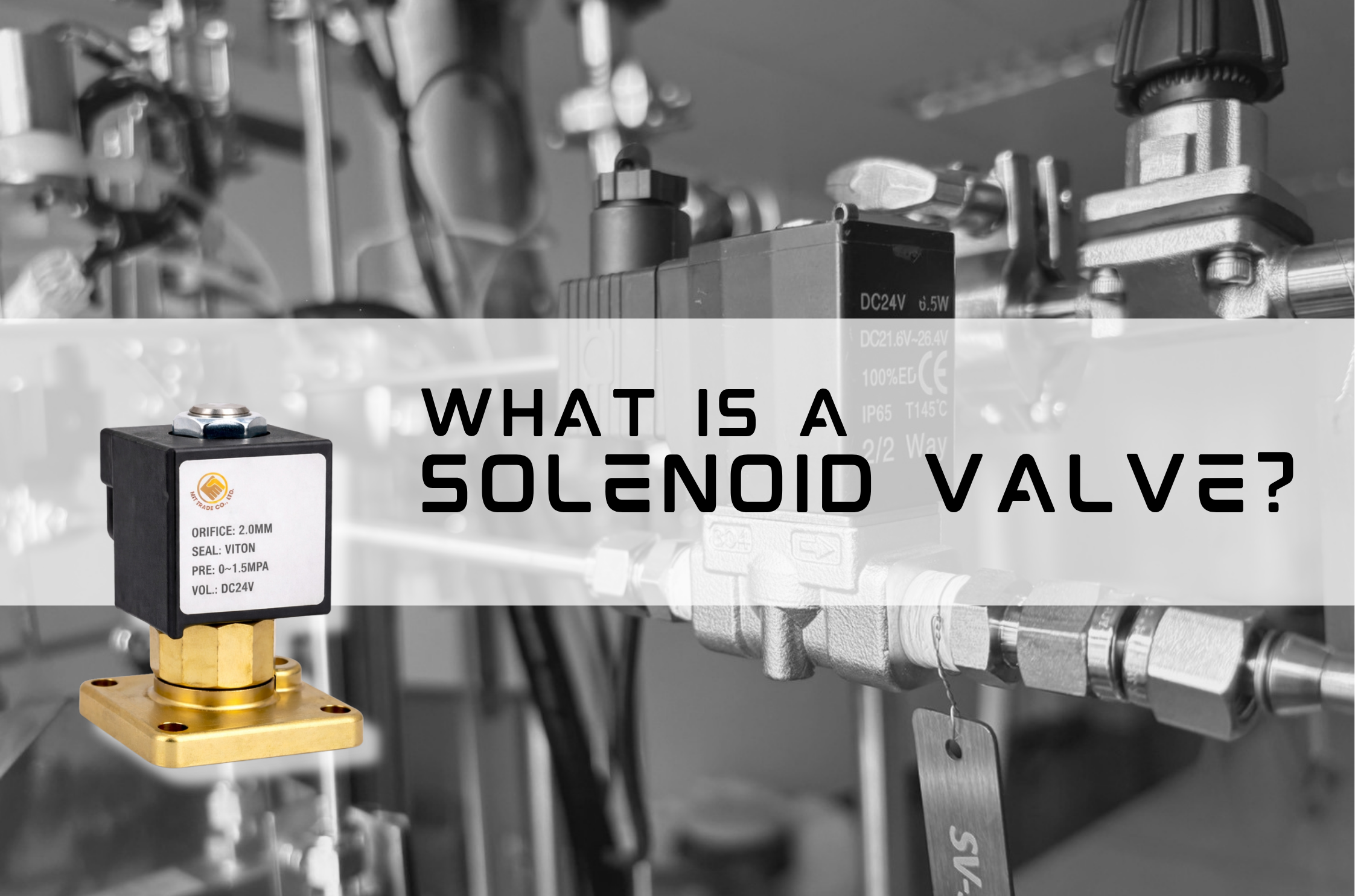
What is a Solenoid Valve?
A Solenoid Valve is an electromechanically operated valve used to control the flow of liquids or gases, replacing manual operation. When an electric current passes through its coil, the valve automatically opens or closes, allowing it to be directly integrated with automation systems, PLCs, and sensors.
They are found everywhere—from household washing machines and irrigation systems to large-scale industrial process control. It is an indispensable device in modern engineering.
Physics and Engineering Principles
Solenoid Coil and Electromagnetic Field
The heart of a Solenoid Valve is the Coil, which consists of copper wire wound around a core. When electric current flows through the coil, it generates an Electromagnetic Field according to Ampere’s Law. The strength of the magnetic field depends on the number of coil turns and the current flowing through it.
2. An electromagnetic field is generated, attracting the Plunger (a movable iron core).
3. The Plunger moves upwards → Opening the Orifice for liquid/gas to flow through.
4. When power is cut → A spring pushes the Plunger back down → Closing the Orifice.
Normally Closed (NC) vs Normally Open (NO)
Most Common
Specialized Use
Direct Acting vs Pilot Operated
Works at 0 bar
Requires Min. ΔP
Types of Solenoid Valves
By Port and Position (Way)
The number before the “/” indicates the number of Ports (inlets/outlets), and the number after the “/” indicates the number of Positions (operational states).
By Body Material
Solenoid Valve vs Pneumatic Valve — Which to choose?
Automatic control valves aren’t limited to electric ones. Industrial plants also utilize Pneumatic Valves (air-operated) and Hydraulic Valves. Choosing the right type from the start reduces long-term problems and costs significantly.
Direct Comparison Table
| Feature | Solenoid Valve | Pneumatic Valve |
|---|---|---|
| Actuator | Electricity (Coil) | Air Pressure |
| Response Time | ● Very Fast (~ms) | ● Fast, but depends on air line length |
| Actuation Force | ● Limited by Coil | ● Very High, suitable for large valves |
| Safety | ● Caution in spark-risk areas | ● Safer in hazardous environments |
| PLC Connection | ● Direct integration | ● Requires a Solenoid Pilot first |
| Initial Cost | ● Lower | ● Higher, requires compressed air system |
| Maintenance | Coil and Seals | Seals and Air filters |
| Best For | General Automation Systems | Systems needing spark-prevention |
Selection Criteria
-
1Does the facility already have a compressed air system?If yes → Pneumatic Valves might be more cost-effective long-term. / If no → Solenoid Valves save the cost of investing in a new air system.
-
2Is the operating area at risk for sparks or explosions?Areas with flammable gases, vapors, or combustible dust → Pneumatic Valves are safer since there is no electricity at the valve itself.
-
3How much response time and force are needed?Fastest response + Direct PLC connection → Solenoid. / High force needed for massive valves → Pneumatic.
How to Choose the Right Solenoid Valve
Once you’ve decided to use a Solenoid Valve, the next step is selecting the correct specifications based on these 5 factors.
-
1Media TypeLiquid / Gas / Steam / Corrosive — This dictates the Body and Seal materials. E.g., Oil → Brass + Nitrile / Acid → SS 316 + PTFE.
-
2Operating PressureSpecify both Minimum and Maximum Operating Pressure. Low pressure → Direct Acting. / High pressure and large flow → Pilot Operated.
-
3Orifice Size and Flow RateCalculated using the Cv value (Flow Coefficient), which indicates how much flow passes at ΔP = 1 psi. Choose a Cv that meets your required flow rate.
-
4Coil Voltage and Duty CycleSpecify AC or DC and Voltage (e.g., 24VDC, 110VAC, 220VAC). Verify the Duty Cycle to ensure the coil can handle your operational timing (Continuous duty vs Intermittent).
-
5IP Rating and EnvironmentOutdoors or high humidity → IP65 or higher. / Explosive risk zones → Explosion-proof models. / High ambient temperature → Specify appropriate Coil T-class.
- Water / Air / General Oil → Brass Body + NBR Seal
- Concentrated Acids / Bases → PVC or PP Body + PTFE Seal
- Food / Pharma / Clean fluids → SS 316 Body + EPDM or PTFE Seal
- Steam / High Temperature → SS 304/316 Body + PTFE Seal + High-temp Coil
- Hydraulic Oil → Brass or SS + FKM (Viton) Seal
Common Problems and Solutions
Improper maintenance or selecting the wrong specifications often leads to these recurring issues.
| Problem | Common Cause | Solution |
|---|---|---|
| Valve won’t open | Burnt coil / Low voltage / Pressure below Min ΔP | Measure voltage at coil terminals / Replace coil / Check system pressure |
| Valve leaks | Degraded seal / Scale or debris blocking the orifice | Replace seal / Clean the orifice |
| Valve sticks | Debris trapped inside / Corroded plunger | Flush the system / Replace plunger / Install a strainer upstream |
| Coil overheats | Duty cycle exceeded / Wrong voltage / Coil too small | Check voltage / Upgrade to a continuous duty rated coil |
| Loud noise (Water Hammer) | Valve closes too fast causing a pressure surge | Use a slow-closing valve / Install a surge arrestor |
Frequently Asked Questions (FAQ)
Tell us your media type, pressure, and application, and we’ll help you find the exact match.
