



Knowledge Base
Types, Materials & Selection Guide — Everything in One Place
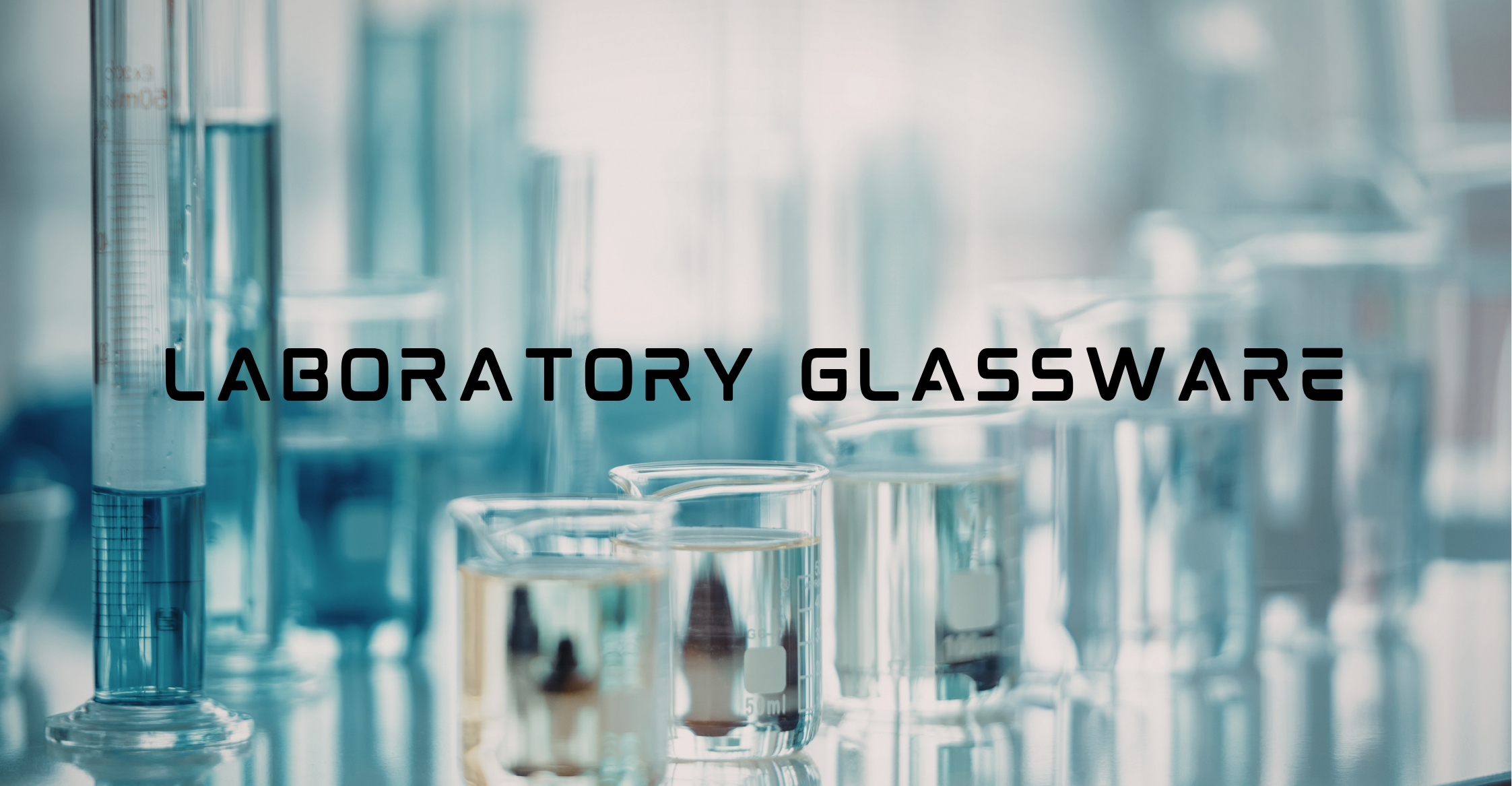
What is Laboratory Glassware?
Laboratory Glassware refers to equipment made of glass or transparent materials used for measuring, mixing, heating, and analyzing substances in a laboratory. While they may seem like simple containers, choosing the wrong type or material can affect the accuracy of experimental results, or worse, cause the glass to break during an experiment.
Choosing the wrong glassware isn’t just inconvenient — it can compromise experimental accuracy or cause dangerous breakage mid-experiment.
Types of Laboratory Glassware
Lab glassware can be divided into 3 main categories based on usage.
Category 1 — Volumetric Glassware
Designed for precise volume measurement — often marked Class A or Class B depending on tolerance.
| Equipment | Application | Accuracy |
|---|---|---|
| Volumetric Flask | Preparing standard solutions | ● Very High |
| Burette | Titration | ● Very High |
| Pipette (Grade A) | Precise transfer of small volumes | ● Very High |
| Graduated Cylinder | General volume measurement | ● Medium |
Category 2 — General Use Glassware
This group is what most people picture when they hear the word “lab” — and they are the most heavily used.
The workhorses of any lab — you’ll reach for these every single day.
- Beaker — Cylindrical container for mixing and heating. Not suitable for precise volume measurements.
- Erlenmeyer Flask (Conical Flask) — Narrow neck reduces evaporation. Ideal for swirling and titration.
- Test Tube — Small glass tube perfect for small-scale experiments.
- Round-bottom Flask — Even heat distribution. Ideal for reflux and distillation.
- Watch Glass — Used as a beaker cover or to hold small samples.
- Funnel — Used for filtering or transferring liquids.
Category 3 — Specialized Glassware
For tasks that require more than just mixing or measuring.
- Condenser — Condenses vapors back to liquid during distillation.
- Separating Funnel — Separates immiscible liquids, such as water and oil.
- Buchner Funnel — Used for vacuum filtration.
- Desiccator — Stores samples in a completely dry environment, protecting them from moisture.
Glassware Materials — Why It Matters More Than You Think
This is the part many people overlook — not all glass is the same.
This is where most people stop reading — but it’s also where the real decisions happen.
This glass incorporates boron oxide (B₂O₃) into its SiO₂ structure, causing two major changes:
Why is it more heat-resistant?
Normal glass structures expand significantly when heated. Rapid cooling causes rapid shrinking, leading to cracks. However, B₂O₃ partially replaces the SiO₂ network, lowering the Coefficient of Thermal Expansion (CTE) to just ~3.3 × 10⁻⁶/°C compared to normal glass at ~9 × 10⁻⁶/°C. This means it expands and contracts 3 times less, providing excellent resistance to Thermal Shock.
In short: less expansion = less stress on the glass structure = doesn’t crack when you heat it fast.
Better chemical resistance?
The tighter Si-O-B structure prevents most acids and bases from corroding the glass surface, except for HF (hydrofluoric acid) and highly concentrated bases at high temperatures.
Softening Point: ~820°C
Price: Medium
Na₂O (sodium oxide) and CaO (calcium oxide) are added to lower the melting point, making it easier and cheaper to produce. Consequently, its CTE increases to ~9 × 10⁻⁶/°C, making it far less heat-resistant.
Price: Low
With highly pure SiO₂, the CTE drops to just ~0.55 × 10⁻⁶/°C, 6 times lower than Borosilicate, offering outstanding Thermal Shock resistance. However, manufacturing requires temperatures over 2,000°C, making it very expensive.
The advantage over Borosilicate: Quartz glass is UV transparent, making it the only option for UV Spectroscopy and Photochemistry.
UV Transparent: Yes
Price: Very High
Material Comparison Table
| Property | Borosilicate | Soda-lime | Quartz |
|---|---|---|---|
| Main Composition | SiO₂ + B₂O₃ | SiO₂ + Na₂O + CaO | Pure SiO₂ |
| Thermal Shock Resistance | ● Very Good | ● Low | ● Excellent |
| Chemical Resistance | ● Very Good | ● Medium | ● Excellent |
| Max Temperature | ~500°C | ~200°C | ~1,100°C |
| UV Transparency | ● Not UV Transparent | ● Not UV Transparent | ● UV Transparent |
| Price | ● Medium | ● Low | ● Very High |
| Best For | General lab use | Non-heating applications | Highly specialized tasks |
How to Choose the Right Glassware
Always ask yourself these 3 questions before choosing:
-
1What chemicals are being used?If using HF or hot concentrated bases → avoid Borosilicate and use PTFE or Platinum instead. / For general acids and bases → Borosilicate is perfectly fine.
-
2What level of accuracy is required?Quantitative analysis → Class A only. / General experiments → Class B or graduated is sufficient.
-
3Will heat be applied?Direct heating or Autoclave → Borosilicate only. / No heat → Soda-lime is usable and cheaper.
Maintenance and Care Guide
Lab glassware isn’t cheap. With proper care, it will last a very long time.
Cleaning
- Rinse with distilled water immediately after use. Do not let chemicals dry inside the vessel.
- For stubborn residues, use Chromic Acid or Aqua Regia (with extreme caution) or an Ultrasonic Cleaner.
- Never use abrasive scouring pads — they cause micro-scratches on the glass surface that accumulate and eventually lead to breakage.
Storage
- Store upright. Do not stack them, especially narrow-neck flasks.
- Volumetric glassware should be stored in separate boxes or racks, as calibration is ruined if the glass chips.
- Glassware used for corrosive substances should be stored separately from general glassware.
Signs for Immediate Replacement
A hairline crack might look harmless. It isn’t. Replace it.
Frequently Asked Questions (FAQ)
Tell us your application and the chemicals you use, and we will help you find the perfect match.
